

Choosing the right duvet for your bed is essential for a good and revitalizing sleep.
However, when making your choice, there are several key factors to consider to ensure a high-quality rest: your body size, the size of your bed, the duvet’s fabric material, its filling, maintenance requirements, the season, and even the climate where you live.
To make your decision easier, we’ve simplified the process of choosing the perfect duvet into three easy steps:
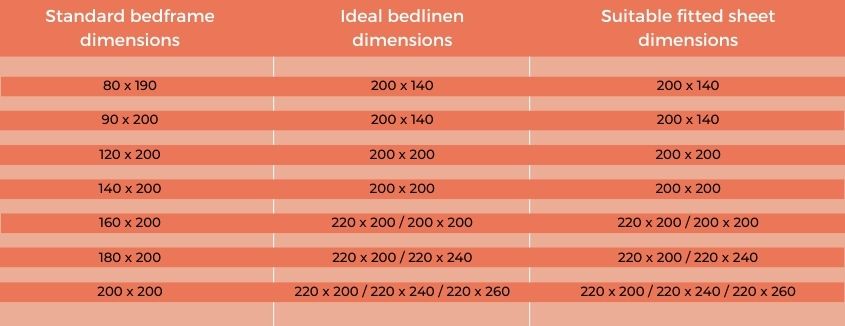
1. Choose the right duvet size based on the size of your bed:
The first thing you need to know is the correct size of your bed frame, as this will determine the appropriate size of your duvet. For easier orientation, refer to the standard bed frame sizes in the table below:
2. Choose the right thermal insulation:
Select your duvet based on the season and your bedroom temperature. Also consider your personal preferences regarding duvet thickness, as everyone reacts differently to temperature changes—some overheat quickly, while others feel cold even with a slight temperature drop.
Based on thermal insulation, duvets are classified as:
- SUMMER LIGHT DUVETS: filling weight from 100 g/m² to 200 g/m²
- MEDIUM-WARM DUVETS: filling weight from 300 g/m² to 400 g/m²
- VERY WARM DUVETS: filling weight from 500 g/m² to 600 g/m²
- ALL-SEASON DUVETS: two duvets that can be fastened together—ideally a combination of a light and medium duvet
The insulating effect is not determined by filling weight alone—the type of filling material also plays a crucial role. Some materials offer greater insulation than others at the same weight.
By season, duvets are divided into summer, winter, and all-season duvets:
SUMMER DUVETS
Summer duvets are largely made from natural materials with excellent properties. Natural materials are highly effective at regulating temperature, which is especially important during hot summer nights. Cotton is extremely breathable and moisture-absorbent, wool is a strong thermal insulator, and down is soft and lightweight. These materials create a pleasant sleep climate that supports full-body regeneration. Summer duvets are generally lightweight, though medium-warm options are also suitable for people who feel cold even in warmer months.
WINTER DUVETS
For colder temperatures, choose duvets with high insulation capacity. Wool is a wonderful, eco-friendly natural fiber and insulator. It’s warm in winter, cool in summer, breathable, and prevents excessive sweating—ideal for cozy winter sleep. Down is the lightest natural insulator, making down-filled duvets a softer and lighter alternative to wool for cold nights. Superfine down traps tiny air pockets for insulation, while larger feathers add structure and support. This makes down ideal for winter duvets.
ALL-SEASON DUVETS
These duvets provide breathability and temperature regulation in summer, and enough insulation to stay warm in colder months. This category includes wool duvets made from various natural materials, which adapt well to seasonal and temperature changes. A great choice is a dual duvet system that can be adjusted according to your preferences and the season.
3. Choose the right duvet filling:
NATURAL FILLINGS
Natural fillings like wool, cotton, duck and goose down and feathers are popular for their softness and breathability. Quilted duvets with natural filling have excellent thermal and insulating properties. These fibers trap air, making them ideal for colder months, while remaining breathable enough for warmer conditions. They also regulate body temperature and promote skin breathability, providing comfort across a range of conditions. Quilted duvets with natural fibers are durable and long-lasting.
1. Down
Down clusters grow under the outer feather layers and are soft and flexible, making down a highly effective insulator. It’s lightweight and warm without feeling heavy. Down conforms to your body, offering a protective cocoon during sleep. The Downfil Extra duvet is a luxurious product filled with Nordic goose down and feathers, known for its exceptional softness. It also features a high-quality cotton cover that’s skin-friendly, breathable, and light.
2. Wool
Soft and cozy, wool regulates body temperature by warming in winter and cooling in summer. Its unique cell structure creates millions of air pockets that trap heat and provide insulation. Wool fibers are also highly breathable, preventing overheating during summer nights. Naturally hypoallergenic and resistant to dust mites and mold, wool is a sustainable, durable material for long-term comfort.
3. Cotton
Cotton is known for its lightweight warmth, softness, and comfort. It’s an excellent choice for warmer seasons and heated rooms, especially for those who tend to overheat at night. Cotton duvets are breathable and moisture-wicking, helping regulate body temperature throughout the night.
ALTERNATIVES TO NATURAL FILLINGS – DUVETS FOR ALLERGY SUFFERERS AND ASTHMATICS
Quilted duvets made with synthetic fibers are a great alternative for those allergic to natural fillings or for anyone who needs to wash their duvet more frequently.
1. Microfibers
A great alternative to natural fillings, microfiber duvets offer comfort and thermal insulation year-round at an affordable price. They’re machine washable and dryer-safe, making them durable and easy to maintain—an excellent practical choice.
2. Polyester
Polyester fibers are synthetic, durable, and easy to care for. Their elastic structure makes products flexible and user-friendly. These duvets are also suitable for allergy and asthma sufferers, as they prevent the growth of unwanted microorganisms.


